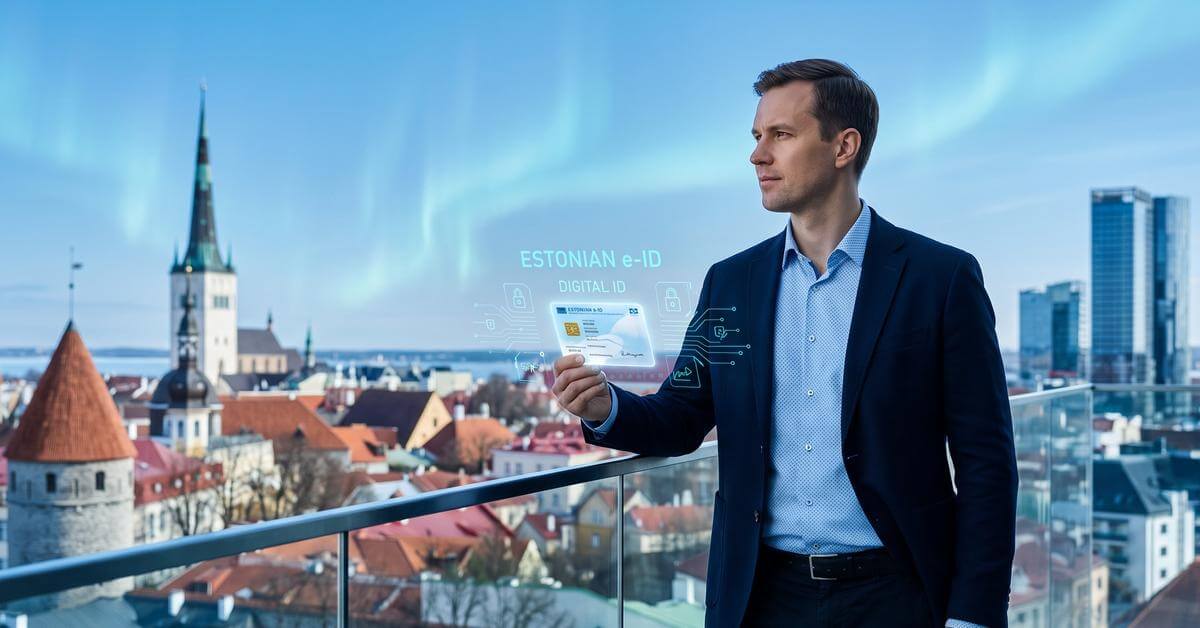
While many Western democracies seem to be in a state of decay and are no longer the safe, civilized and prosperous countries they once were, there are still some European countries that are governed well. One of those that stand out is Estonia.
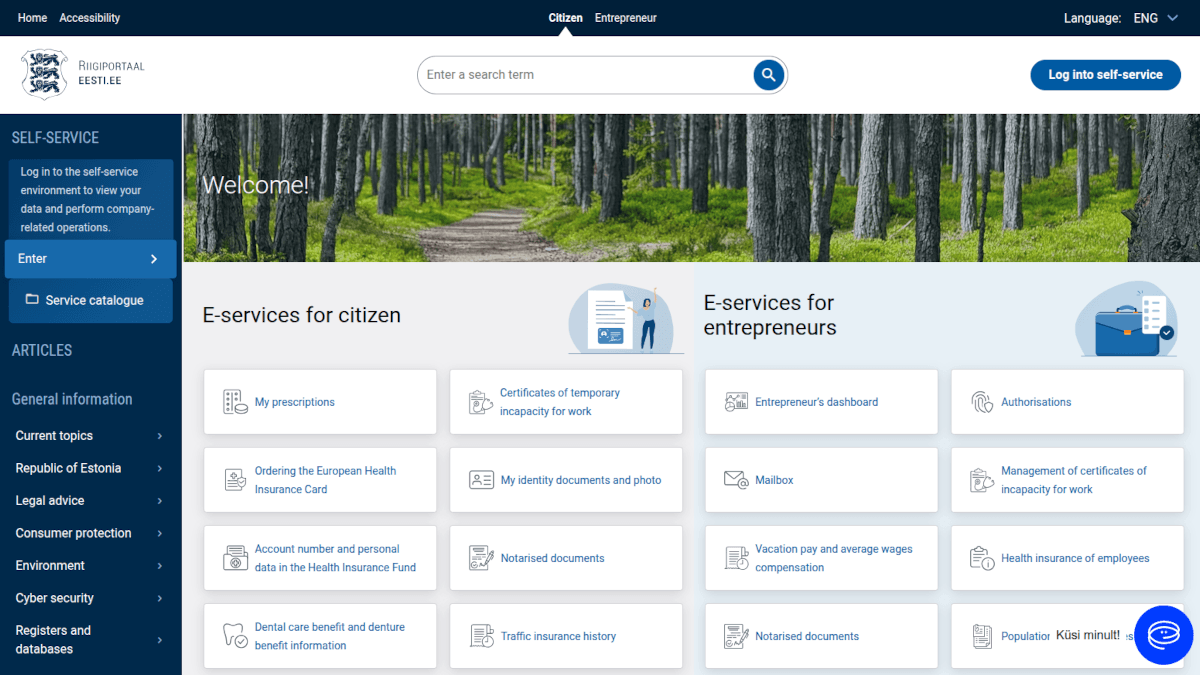
Estonia is probably most well known for multiple software companies that originated from there, such as Wise, Bolt, Pipedrive and Skype. The government itself is also famous for being early in issuing government IDs with an embedded smart chip for online authentication already in the 1990s. Via the national portal at eesti.ee all residents can access extensive eServices ranging from viewing their health benefits to filing taxes.
Estonia has also been running an e-Residency program since 2014, where they issue digital ID cards to foreigners, making it easy for them to remotely log into the government portals and for example, establish businesses, file annual reports and so forth. Note that the e-Residency is not a path to physical residency. Estonia does, however, have a separate Digital Nomad visa program that makes it easy for non-EU citizens to also physically establish themselves in Estonia, assuming, of course, you meet the criteria, which includes, among others, a minimum monthly income of 3960 € from outside Estonia. EU citizens naturally have free mobility inside the EU and can simply get an apartment and register as a resident in Estonia if they so choose. And there are plenty of reasons to do so.
Estonians value health, education and entrepreneurship
I moved to Estonia about one and a half years ago. In my observations Estonia strikes me as a country that values health, education (in particular programming and natural sciences) and entrepreneurship highly.
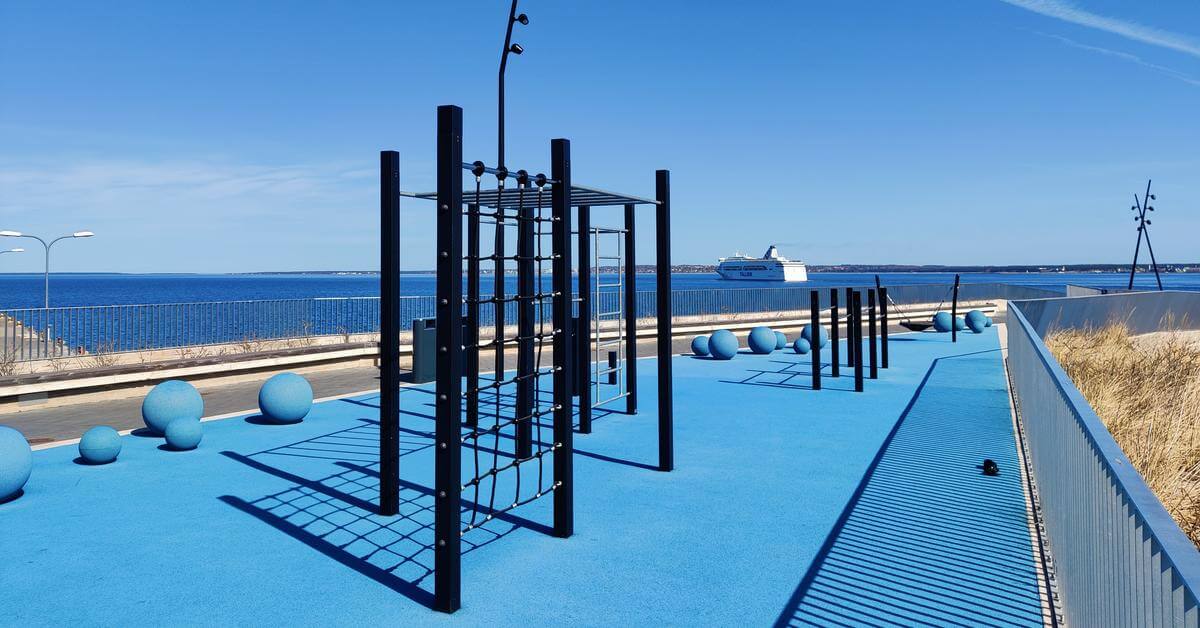
I don’t know how Estonians achieve it, but they look pretty fit and rarely obese. Estonia has rye bread and sauna in their culture just like Finland, and in addition the flat terrain and well-planned bike routes and extensive network of parks (and pull-up bars everywhere) seem to create an environment where it is easy to live in a healthier way. The consumption of processed foods and candy also seems relatively low among Estonians.
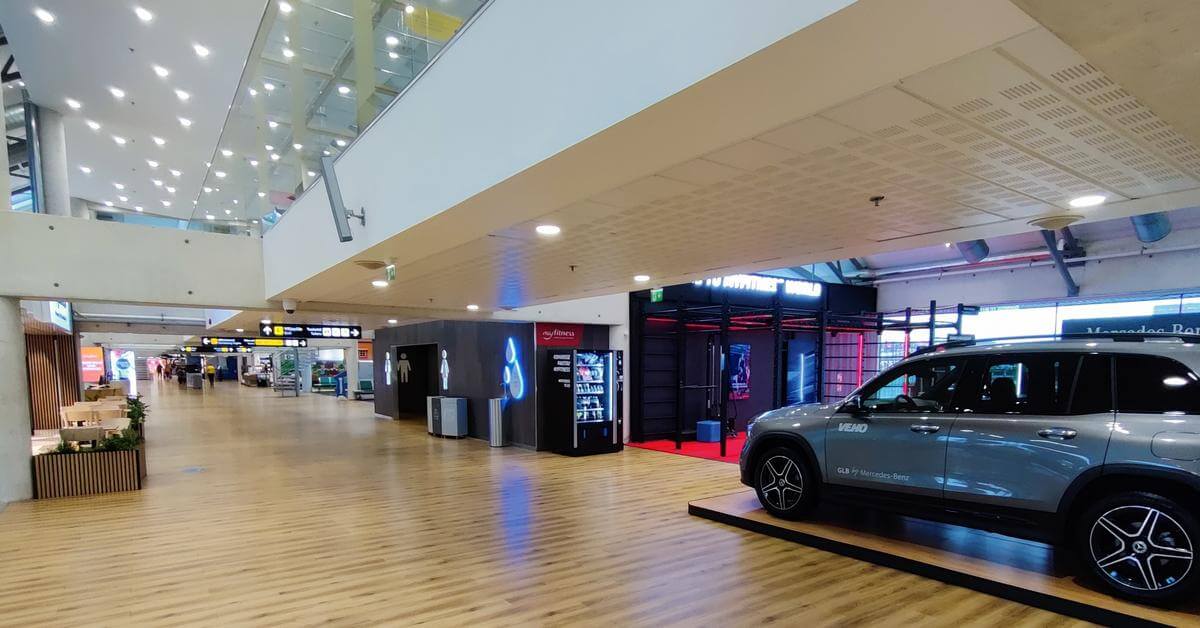
The gym chain MyFitness also seems to be present everywhere. Even the Tallinn airport has a calisthenics workout station right at the departure gates, which anyone is free to use while waiting for their flight to take off. One of the top longevity influencers in Europe, Siim Land, is Estonian.
Estonians also seem to value the school system highly. The government has been actively raising teacher pay and has a stated goal of reaching 120% of the national average by 2027. The students are also expected to value the education and respect their teachers. According to the TALIS 2024 survey (OECD’s international teacher survey), Estonian teachers spend significantly more time on actual teaching and learning and waste less time on interruptions or keeping classroom order compared to the OECD average. This is among the highest rates internationally, meaning they spend relatively little time on maintaining order or dealing with disruptions. While the international education benchmark PISA scores have been dropping globally, Estonia has consistently been climbing the ranks in past decades. In the latest PISA study (from 2022), Estonia ranked number one in Europe for reading, mathematics and science. In the overall results, Estonia ranked seventh globally, only behind countries such as Japan, Korea and Singapore.
Valuing entrepreneurship is evident in how the taxation system is set up in Estonia. Famously, in Estonia, companies can defer taxes on annual earnings and reinvest all of their profit in growing the company. Taxes are due only later, when paid out from the company, for example as dividends. For individuals, receiving dividends from any Estonian or foreign company is tax-free as long as the company paying dividends already paid corporate tax on the same income.
The tax system is also very simple. For all individuals, all types of income, including salary and capital gains, are always taxed at a flat rate of 22%. This removes the incentive for anyone to try to convert income into different types, setting up holding company structures and other optimizations as there is no gain. All entrepreneurs can simply focus on growing their business and forget extra bureaucracy. There is also no marginal tax rate cliff to stop working at – everyone is encouraged to always try to produce as much value as they can. A simple tax system is also reflected in the fact that anyone can easily read all tax rules that apply to individuals in plain English on the Estonian tax authority website, and one does not need to hire any accountants simply to file taxes.
Estonia also has a very straightforward investment account system: any person can freely open a self-directed investment account at any brokerage at no extra cost and report it as such to the tax authority, and then use it to save for an apartment, retirement, or other purposes, and defer all income taxes until withdrawal. There are no caps or time limits, and all residents are encouraged to save and invest as much as they can and thus take responsibility for their own wealth accumulation.
It seems that culturally Estonians respect people who are active and progress in their careers and businesses more than in other countries. Unlike in Finland, successful people are admired and living on government welfare is not romanticized. At the same time, the government benefits are less generous so people can’t live comfortably on them and, for example, many of the asylum seekers Estonia accepted have since left on their own initiative to other European countries in search of better benefits.
Low crime, high trust
Another thing that strikes me when walking the streets of Tallinn is that there are no drug addicts, beggars, thugs or the like. The difference compared to, for example, Vancouver (where I lived previously) is stark. In public buildings, people leave their coats and bags hanging in the lobby while visiting. Private houses and apartment block yards are not fenced. In my building, I noticed people even leave their bikes unlocked in the bike shed. I have also seen the staff of a coffee stall in a shopping mall going for a break and leaving everything unattended, not worrying that anyone would take anything while the staff is away.

This is not just my personal experience. According to the Numbeo crime index, Estonia has one of the lowest crime rates in the world. Also, comparing drug and property crime stats, for example, Finland has twice as much crime per capita, and places like Vancouver in Canada almost five times more.
I don’t have any clear explanation for why crime is so much lower in Estonia, but some suggest that higher social cohesion and lower levels of welfare contribute to people standing to lose more if they behave antisocially. Compared to Finland, Estonia also more readily jails repeat offenders, and those who are put on trial will experience a swifter court process thanks to simplified legal processes and more efficient governance.
Moving to Estonia: quick checklist
Moving to Estonia is very easy for any EU citizen, in particular if your work is not location-dependent (e.g., remote work or an online business) and you are simply looking for the cleanest and safest environment to live in.
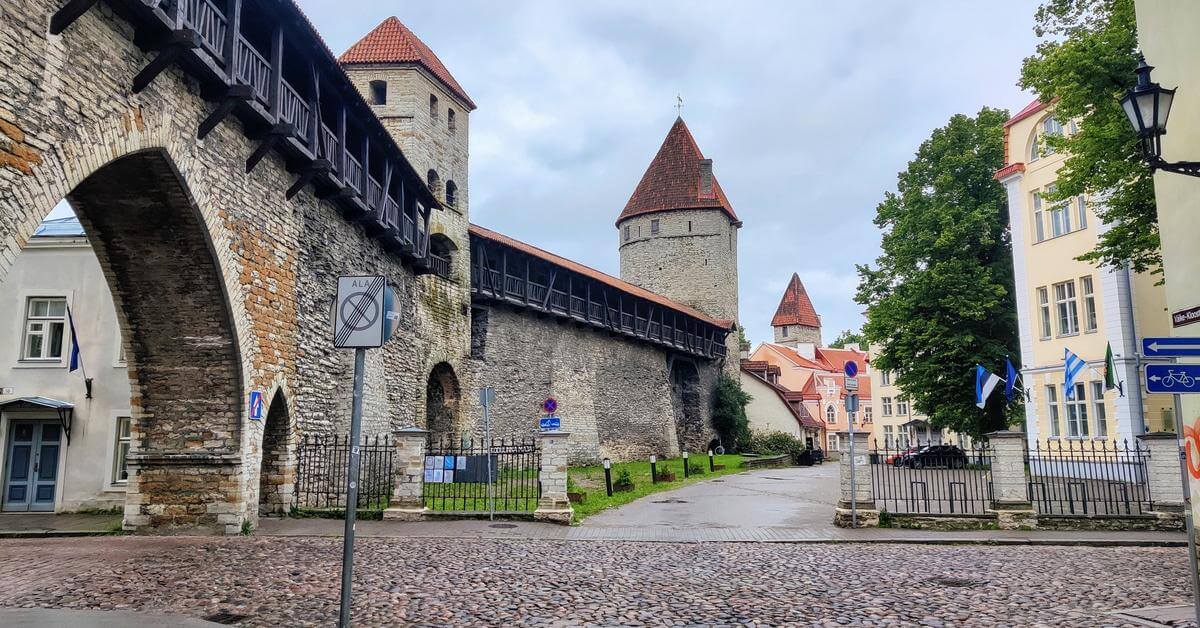
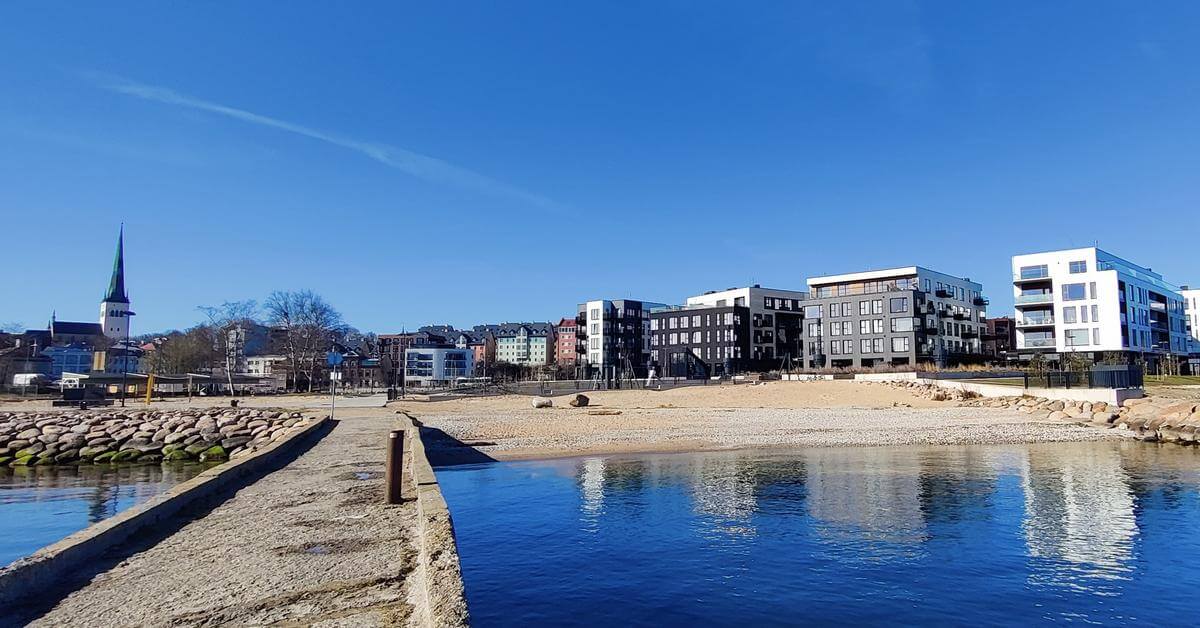
First, check into a hotel in Tallinn, check out various neighborhoods to figure out what area you like (my favorites are Kalaranna, Kalamaja, Noblessner and Volta) and start browsing available apartments in English at kv.ee. Most professionals speak fluent English, so there should not be any difficulty in reaching out to people by email or phone.
The next step is to buy a local prepaid SIM card at e.g., an R-Kiosk or a convenience store as signing up for other matters later on will require an Estonian phone number. Once you have an apartment and e.g., signed a rental agreement, you can register in the population registry online.
After that, you have proof you are a local resident with an address and telephone number in Estonia. With local resident status, you can go to the police station to get a local ID card. Don’t bother scheduling an appointment, just go to the Tammesaare police station in Tallinn, take a queue number and wait. Once it is your turn, they will guide you on how to use the photo booth, fingerprint registration device, and file your application. A few days later you will receive an email confirming whether your application was accepted, and after a few more days, you will get another email notifying you that your ID card has been printed and is available for pick-up at the same location. This will also be your first practical experience of how fast and efficient the government in Estonia is.
Once you have the local ID card, you can use the smart card feature to log into all the government eServices and sort out the rest of the relocation process, such as registering tax residency and getting a family doctor.
How did Estonia evolve to be like this?
After Estonia regained its independence after the fall of the Soviet Union in 1991, the first elected government in 1992 was led by a very progressive 31-year-old Prime Minister Mart Laar, who managed to set up some very good policies and laid the foundation of a society that has evolved well in the decades since. Estonia was very lucky to have people in power in the 1990s who didn’t simply copy what other Western countries were doing, but who tried to think about things from first principles and create Estonia’s own model for efficient and fair governance. As a post-Soviet country, the population had also been vaccinated against overly socialist and unrealistic ideals, and everyone had a healthy distrust of the government’s ability to solve problems and emphasis was placed on people’s liberty to work for themselves as they best see fit. The improvement in living standards over the past 35+ years has also been witnessed by the population, and voting behavior supports keeping the country on the same trajectory.
General living standards still continue to improve as the nominal wage growth sits at around 6%, clearly above the annual inflation rate of about 3%. In 2026, the Estonian economy is expected to grow about 2.4%, which is faster than the EU average. The growth in Estonia is not the result of any accounting tricks - Estonia is part of the euro and can’t print its own currency, nor has it been funding the public sector with excessive debt. With a 24% debt-to-GDP ratio, Estonia consistently ranks as one of the most responsibly managed countries among advanced Western economies.
As wages in Estonia soon catch up with the EU average, and higher defence spending has forced the government to raise taxes in recent years, the economic growth that Estonia has enjoyed for 35+ years since it exited the Soviet Union might slow down a bit in future years. The policies that fueled this growth in living standards, however, are likely to stay.
The tiger leap
There is one specific government policy in Estonia’s history that I think should be highlighted in particular. Estonia was very progressive by announcing the Tiigrihüpe (Tiger Leap) program in 1996 with the goal of equipping all schools with computers and teaching all students the basics of programming. This surely had a large influence on why Estonia has so many successful software companies, why the government eServices are so mature that even neighboring countries like Finland are striving to copy the Estonian government’s IT architecture called X-road.
The Tiigrihüpe project was originally suggested in the mid-1990s by Toomas Hendrik Ilves, then ambassador of Estonia to the United States, Canada and Mexico, and later President of Estonia in 2006–2016. While he was a psychologist by education, he was also a self-taught amateur programmer and used his political influence to promote sensible adoption of information technology in both Estonia and the EU.
The history of Estonia has several prominent figures who were not lawyers by profession but engineers, scientists and historians who were very practical in their political decisions, which I think is now reflected in how government processes were formed.
The video below shows how the Estonian government advertises itself and what values they choose to highlight:
Should other countries adopt policies from Estonia?
Of course, not everything is perfect in Estonia either. The fertility rate of 1.16 in Estonia is very low. This trend is present globally, but in Estonia it is way below the EU average. Also, the service culture is something that needs to improve in Estonia. While services are in general fast and efficient, the attitude of people working in cafes and stores does not reflect a willingness to fill in gaps if the standard process falls short, nor are visitors actively made to feel welcome as individual humans, but are treated as mere process inputs.
However, many of the things listed earlier I think should be studied by policymakers elsewhere. Societies are complex systems and there is of course no guarantee that copying a single policy to another country with different ethnicities, history and ingrained culture would lead to the same policy outcomes. But considering that Estonia is a small country without favorable geography and no natural resources, and that it started out from a place of total chaos, low economic activity and high crime in 1992 to rise to what it is now in 2026, the success it has seen is surely largely a result of good policies, governance and culture that other countries can and should mimic.