Stop using MySQL in 2026, it is not true open source
If you care about supporting open source software, and still use MySQL in 2026, you should switch to MariaDB like so many others have already done.

If you care about supporting open source software, and still use MySQL in 2026, you should switch to MariaDB like so many others have already done.

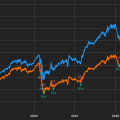
In January 2024 I wrote about the insanity of the Magnificent Seven dominating the MSCI World Index, and I wondered how long the number can continue to go up? It has continued to surge upward at an accelerating pace, which makes me worry that a crash is likely closer. As a software professional, I decided to analyze whether using stop-loss orders could reliably automate avoiding deep drawdowns.

I am a huge fan of Git, as I have witnessed how it has made software development so much more productive compared to the pre-2010s era. I wish all Debian source code were in Git to reap the full benefits.

The discovery of a backdoor in XZ Utils in the spring of 2024 shocked the open source community, raising critical questions about software supply chain security. This post explores whether better Debian packaging practices could have detected this threat, offering a guide to auditing packages and suggesting future improvements.

Locking down database access is probably the single most important thing for a system administrator or software developer to prevent their application from leaking its data. As MariaDB 11.8 is the first long-term supported version with a few new key security features, let’s recap what the most important things are every DBA should know about MariaDB in 2025.

I’ve noticed that procrastination and inability to be consistently productive at work have become quite common in recent years. This is clearly visible in younger people who have grown up with an endless stream of entertainment literally at their fingertips, on their mobile phone. It is, however, a trap one can escape from with a little bit of help.

Historically the primary way to contribute to Debian has been to email the Debian bug tracker with a code patch. Now that 92% of all Debian source packages are hosted at salsa.debian.org — the GitLab instance of Debian — more and more developers are using Merge Requests, but not necessarily in the optimal way. In this post, I share what I’ve found the best practice to be, presented in the natural workflow from forking to merging.

Debian packaging is notoriously hard. Far too many new contributors give up while trying, and many long-time contributors leave due to burnout from having to do too many thankless maintenance tasks. Some just skip testing their changes properly because it feels like too much toil. Debcraft is my attempt to solve this by automating all the boring stuff, making it easier to learn the correct practices, and helping new and old packagers better track changes in both source code and build artifacts.

This post is based on a presentation given at the Validos annual members’ meeting on June 25th, 2025.

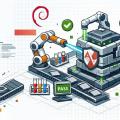
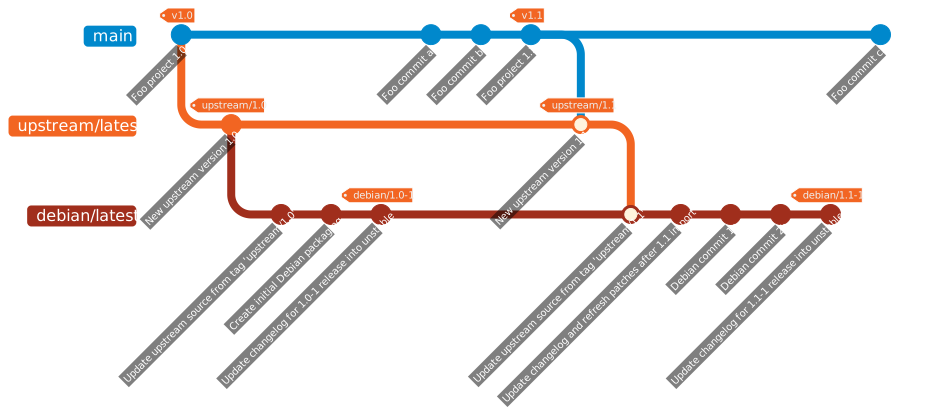
In this post, I demonstrate the optimal workflow for creating new Debian packages in 2025, preserving the upstream Git history. The motivation for this is to lower the barrier for sharing improvements to and from upstream, and to improve software provenance and supply-chain security by making it easy to inspect every change at any level using standard Git tooling. Key elements of this workflow include: Using a Git fork/clone of the upstream repository as the starting point for creating Debian packaging repositories. Consistent use of the same git-buildpackage commands, with all package-specific options in gbp.conf. DEP-14 tag and branch names for an optimal Git packaging repository structure. Pristine-tar and upstream signatures for supply-chain security. Use of Files-Excluded in the debian/copyright file to filter out unwanted files in Debian. Patch queues to easily rebase and cherry-pick changes across Debian and upstream branches. Efficient use of Salsa, Debian’s GitLab instance, for both automated feedback from CI systems and human feedback from peer reviews. To make the instructions so concrete that anyone can repeat all the steps themselves on a real package, I demonstrate the steps by packaging the command-line tool Entr. It is written in C, has very few dependencies, and its final Debian source package structure is simple, yet exemplifies all the important parts that go into a complete Debian package:

After careful consideration, I’ve decided to embark on a new chapter in my professional journey. I’ve left my position at AWS to dedicate at least the next six months to developing open source software and strengthening digital ecosystems. My focus will be on contributing to Linux distributions (primarily Debian) and other critical infrastructure components that our modern society depends on, but which may not receive adequate attention or resources.

Are you a student aspiring to participate in the Google Summer of Code 2025? Would you like to improve the continuous integration pipeline used at salsa.debian.org, the Debian GitLab instance, to help improve the quality of tens of thousands of software packages in Debian?

In today’s digital landscape, social media is more than just a communication tool — it is the primary medium for global discourse. Heads of state, corporate leaders and cultural influencers now broadcast their statements directly to the world, shaping public opinion in real time. However, the dominance of a few centralized platforms — X/Twitter, Facebook and YouTube — raises critical concerns about control, censorship and the monopolization of information. Those who control these networks effectively wield significant power over public discourse.

Becoming a Debian maintainer is a journey that combines technical expertise, community collaboration, and continuous learning. In this post, I’ll share 10 key habits that will both help you navigate the complexities of Debian packaging without getting lost and enable you to contribute more effectively to one of the world’s largest open source projects.

Most people with Linux experience have at some point installed .deb files on Debian or the more famous variant of it, Ubuntu. Programmers who have been involved with packaging and shipping software know that the code that generates those .deb packages is always in the debian/ subdirectory in a software project. However, anyone who has tried to do Debian packaging also knows that all the automation involved can be challenging to grasp, and building packages, modifying packaging files, and repeatedly rebuilding them can feel way more frustrating than iterating in regular software development. As Debian has been around for three decades already, there is a lot of online documentation available, but unfortunately, most of it is outdated, and reading about old tools might just add to the confusion. Thus, let me introduce an explainer of what the structure in 2025 should look like on a well-maintained Debian package source, and what benefits it brings. First, I’ll run through the basics to ensure all readers have them fresh in their mind, and further down, I get into the increasingly complex workings of how Debian source packaging works and why they have a certain git repository structure.
Considering LLMs are basically massively big statistical machines, a logical assumption would be that they should be well suited for predicting how the economy and the stock market develop. Let’s conduct a small test to see if that holds for the largest generic LLMs of today.

A large part of a manager’s role is to make decisions and be responsible for their outcomes. While there is ample advice on how to be successful in many other managerial core areas, such as growing your people, the domain of high-quality decision-making seems less crowded. In this post, I summarize what I have found during my 20+ years as a manager to be a simple and effective way to approach decision-making.

In software engineering, most ideas can be implemented without writing any design document at all. This is particularly prominent in open source communities. For example, the Linux kernel has 35 million lines of code that have been written and rewritten many times over alongside 30 years of mailing list discussions. Linux wasn’t created as a result of a grandiose design document by Linus Torvalds, but it evolved organically in small increments of actual running code.

The XZ Utils backdoor, discovered last week, and the Heartbleed security vulnerability ten years ago, share the same ultimate root cause. Both of them, and in fact all critical infrastructure open source projects, should be fixed with the same solution: ensure baseline funding for proper open source maintenance.

For a software engineering organization to be efficient, it is key that everyone is an efficient communicator. Everybody needs to be calibrated in what to communicate, to whom and how to ensure information spreads properly in the organization. Having smart people with a lot of knowledge results in progress only if information flows well in the veins of the organization.

People usually associate advanced software engineering with gray-bearded experts with vast knowledge of how computers and things like compiler internals work. However, having technical knowledge is just the base requirement to work in the field. In my experience, the greatest minds in the field are not just experts in knowledge, but also extremely efficient communicators, particularly in writing.

What is the single most common action you repeat over and over when using your computer? Let me guess – opening a new tab in the browser. Here are my tips for opening, switching and closing tabs everyone should know.

Git is by far the most popular software version control system today, and every software developer surely knows the basics of how to make a Git commit. Given the popularity, it is surprising how many people don’t actually know the advanced commands. Mastering them might help you unlock a new level of productivity. Let’s dive in!

When people learn programming they – for completely obvious and natural reasons – initially focus on learning the syntax of programming languages and libraries. However, these are just tools. The essence of software engineering is about automating thought, applying algorithmic thinking, and anticipating the known and unknown. The code might be succinct, but the reasoning behind it can be extensive, and it needs to show in the communication around the code. The more senior a programmer is, the more their success depends on their communication skills.

The stock market is a powerful globally distributed forecasting system. Last Friday it was forecasting a rosy future as the MSCI World index got to a new all-time high. But it does not make sense.

First we make our habits, and then they make us ― John Dryden, poet and literary critic

In software development, the code review process stands as a crucial checkpoint for ensuring code quality, fostering collaboration, and promoting knowledge sharing among team members. Despite the importance, many engineers lack a clear mental map of how effective reviews work. This is my attempt to help code reviews and reviewers improve.

While large organisations scale best by emphasizing asynchronous communications, in-person or video meetings also have their place. As a manager who is involved in a lot of planning and coordination work I’ve noticed that I’ve spent the majority of my working time in meetings in past years. These are my 5 tips to make meetings as efficient as possible.

The key to being productive as a programmer is to have a great code editor. I have been an avid user of Atom since 2014, and its successor Pulsar since now in 2023.

In popularizing Linux containers, Docker brought about a new era of systems design based on these lightweight platforms, rather than heavy virtual machines. However, now that Docker is slowly declining, it’s time to learn about the next generation of Linux container tools.

The perfect home office setup achieves two things: it helps you stay focused for extended periods, allowing you to be in “the flow” and it prioritizes ergonomic design to ensure that long hours at the computer don’t compromise your health.

As a software developer, your core skill is how to improve an existing code base to make the software better iteratively, patch by patch. To be a good software developer you need to: understand the concept of a code patch, know how to do code improvements in well sized and properly documented patches, and skillfully use git version control software to manage patches.

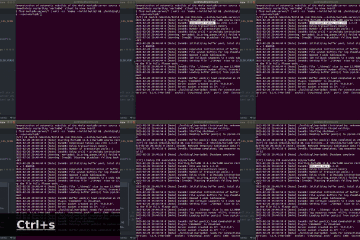
The MariaDB server has over 2 million lines of code. Downloading, compiling (and re-compiling), and running the test suite can potentially consume a lot of time away from actually making the code changes and being productive. Knowing a few simple shortcuts can help avoid wasting time.

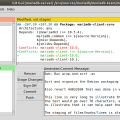
The main test system in the MariaDB open source database project is the mariadb-test-run script (inherited from mysql-test-run). It is easy to run and does not require you to compile any source code.

What is the key to being an efficient programmer? Well, the answer is surprisingly simple. Having a setup where you can write and test your code over and over in an uninterrupted flow will dramatically increase your productivity.

This is the biggest and most common mistake I see that prevents people from thinking clearly, and it is also the most difficult one to unlearn.

Of all CI systems I’ve used during my software development career, both as developer and manager, GitLab CI has proven itself to be the overall best system out there.

In over 22 years of working with Linux systems, I have often seen people use excessive force to kill various computer programs, causing unnecessary suffering.

With so many options to choose from and with so many solutions offered by others, each screaming pick me!, people too often lose sight of the actual goal. In the most complex system of them all, life itself, I find it much easier to navigate when the priorities are clear. Money is not number one. It is just a means to an end. In my opinion, the best choice of priorities, in this order, are: truth, health and wealth.

Perfection is achieved, not when there is nothing more to add, but when there is nothing left to take away. ― Antoine de Saint-Exupéry, aviator and author